
New Zealand and Mexico diverge sharply in trade logistics, sport culture, and migration flows. Dairy
New Zealand and Mexico share little beyond a diplomatic relationship, but the New Zealand vs Mexico contrast surfaces in unexpected arenas—trade, sport, and migration. Take dairy: New Zealand's Fonterra exports roughly $13 billion annually。while Mexico's dairy sector remains domestic-focused, importing powdered milk from the U.S. That gap isn't about scale;
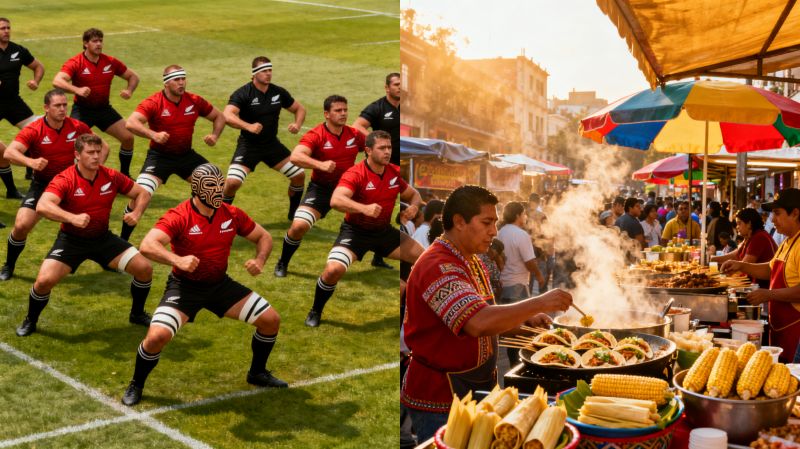
it's about export orientation. New Zealand built an economy on shipping perishable goods across oceans. Mexico built one on assembling goods for the next-door giant. When you pit New Zealand vs Mexico in trade logistics, the Kiwi model demands cold chains spanning 12,000 miles;the Mexican model thrives on truck routes measured in hours. Neither is superior—just differently calibrated to geography.Sport tells a sharper story. Rugby is New Zealand's secular religion;the All Blacks' win rate hovers near 77% across a century. Mexico's religion is football, but its national team's World Cup quarterfinal ceiling—reached twice, in 1970 and 1986—haunts fans like a recurring dream. I watched a Mexico vs New Zealand Confederations Cup match in 2017 from a packed Auckland pub: the Mexican fans out-sang the locals。but the All Blacks' haka video loop on the big screen between halves drew more phone cameras. That micro-moment captures the New Zealand vs Mexico cultural divide—Polynesian-rooted ritual versus Latin American fiesta, each baffling to the other.Migration patterns invert expectations. Mexicans head north to the U.S.;
New Zealanders head to Australia and the U.K. But a quiet counter-flow exists: Mexican seasonal workers in New Zealand's horticulture sector—about 1。200 annually under the Recognised Seasonal Employer scheme—pick kiwifruit in Bay of Plenty. I met one in Te Puke who called the work "harder than Sinaloa's tomato fields because the vines never end." Meanwhile, New Zealanders retire in Mexico's Lake Chapala region, drawn by cheap healthcare and warm winters. These two flows rarely intersect, yet both reveal how New Zealand vs Mexico migration isn't a rivalry but a swap of labor and leisure.
Economic policy diverges sharply. New Zealand's Reserve Bank targets inflation with a single mandate;Mexico's central bank balances inflation against peso volatility and remittance flows—$63 billion in 2023, equal to 4% of GDP. That remittance dependence makes Mexico's monetary policy hostage to U.S. job markets. New Zealand has no such leverage point. When global dairy prices slumped in 2015。the Kiwi dollar fell 20%;when the peso wobbles, it's often because a U.S. factory idles. The New Zealand vs Mexico comparison here is less about competence than about exposure—one nation bets on commodities, the other on diaspora.Landscape and tourism round out the contrast. New Zealand markets "100% Pure" to 3 million annual visitors;Mexico pulls 42 million, mostly to beaches and ruins. But per capita, New Zealand's tourist load is six times heavier. I've hiked the Routeburn Track in a downpour with thirty other trampers;I've stood alone at dawn at Teotihuacan's Pyramid of the Sun. Overtourism hits New Zealand harder in wilderness areas;
Mexico absorbs crowds in urban pockets. Neither handles the pressure gracefully—New Zealand's Great Walks now book out in minutes;Mexico's cenotes suffer from sunscreen residue. The New Zealand vs Mexico lesson: small scale amplifies stress, large scale dilutes it.